

Posted by writeradmin
I’m getting a dental implant, and the oral surgeon will be placing the implant itself. After it heals, I’m supposed to go back to my dentist for the crown. I assumed the surgery was the complicated part. Does it really matter which dentist makes the implant crown, or is that basically the same as getting a regular crown?
Melissa
Dear Melissa,
Please do not have an oral surgeon place your dental implant before reading this post. The crown absolutely matters, but even before that, the implant itself needs to be planned by the dentist. There is much more to the procedure than the surgery.
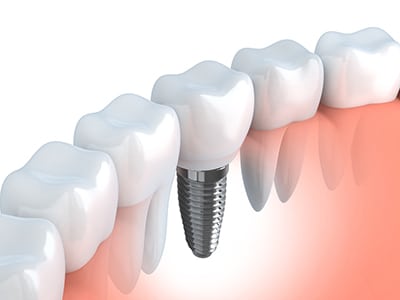
A dental implant restoration has three basic components:
- The implant, which is placed in your jawbone and replaces the missing tooth root.
- The abutment, which connects the implant to the replacement tooth.
- The crown, which is the visible portion of your new tooth.
Each component has an important job. The implant needs to be properly planned and placed. Then, it will need time to integrate with your bone so that it will be secure. The restoration—the crown that goes on top of the implant— is responsible for much of what you will actually see, feel, and use every day, but without a properly planned root form, it won’t fit right.
Once the implant has healed, your dentist must create an abutment and crown that work with your bite, gums, neighboring teeth, and smile. However, that can’t happen if the implant is placed in a way that doesn’t collude with your bite well. This is why you need to have the dentist plan the implant placement, NOT the oral surgeon.
Why Does the Implant Crown Matter?
You might think of an implant crown as simply the finishing touch that goes on top when the real work is already done, but it has an important functional role.
Your dentist needs to consider how the crown meets the teeth on either side of it and how it contacts the opposing tooth when you bite. Poorly designed contacts can make it easier for food to become trapped around the implant. A crown that does not fit comfortably into your bite can also create problems, including throwing off your bite all together, which can lead to TMJ Disorder.
The shape of the restoration is important to your gums, too. Ideally, you don’t want your new tooth to look as though a crown has simply been placed on top of your gum tissue. Careful restoration can help create a more natural transition between the gums and the replacement tooth.
This is especially noticeable when an implant replaces a tooth that shows when you smile.
What Is an Abutment?
The abutment is the part between the dental implant and crown. While you may never see it once treatment is finished, its design can make a significant difference in the final restoration.
A custom abutment is designed specifically for your implant and your mouth rather than using a standardized shape. This matters because your natural teeth don’t all emerge from the gums in exactly the same shape or at exactly the same angle. A custom abutment allows your dentist to account for the position of your implant, the contours of your gum tissue, and the shape needed for the final crown.
This can help your dentist create a restoration that has a natural appearance while providing appropriate support for the surrounding gum tissue.
Choosing an Implant Dentist
This is an advanced procedure with serious consequences when not done well. In fact there are dental implant horror stories where people have lost part of their jaw. I would start by making sure the dentist has post-doctoral training in dental implants. Dental school alone is not enough.
The top implant dentists are fellows with the International Congress of Oral Implantologists (ICOI).
This blog is brought to you by a top-rated dentist in Baton Rouge, Dr. John Theriot.
Click here to learn about metal free dentistry.