
- Best Baton Rouge Dental Implants Dentist
- When Are Dental Implants Used
- Benefits of Dental Implants
- Planning and Process of Implants
- Dental Implant Care
If you have missing teeth, they can be replaced with dental implants. This is the closest thing to getting your own natural teeth back.
What Is a Dental Implant?
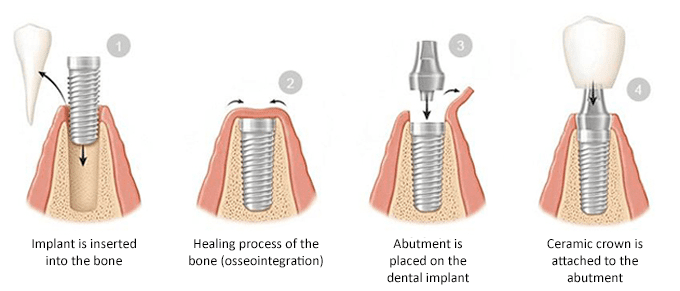
A dental implant is an artificial tooth. A complete implant has three components:
-
Root form – It’s the foundation of a dental implant. A screw-shaped post—usually made of titanium—is gently placed in your jawbone.
-
Abutment – It attaches to the top of the root form and supports a dental crown.
-
Crown – Sometimes referred to as a “cap,” a crown is a custom-made restoration that replaces the portion of your tooth above the gumline.
When Are Implants Used?
Dental implants can replace one or more missing teeth.
-
Replace individual teeth – You can replace each missing tooth with an implant.
-
Replace several missing teeth – Implants can support a dental bridge if you have several missing teeth in a row.
-
Support a denture – Two or more dental implants can support and stabilize a denture.
Dental Implant Benefits
Implants look like natural teeth. And they improve your oral health:
-
Function – They mimic the structure and function of natural teeth. You’ll be able to speak and eat with ease.
-
Longevity – They are anchored in the jawbone for long-lasting results.
-
Preserve jawbone – When your teeth are missing, the jawbone in the space begins to shrink. Dental implants stimulate the jawbone and prevent shrinkage.
What’s the Process?
Successful dental implants begin with precise planning and placement. In our Baton Rouge offices, Dr. Theriot partners with an implant surgeon for long-lasting results.
Implant placement
Before you receive implants, we take the following steps:
- Ensure you’re a candidate for implants by reviewing your medical and dental histories
- Take 3-D x-ray images of your teeth, oral cavities, jawbone, and sinuses and study them to determine:
- If you have sufficient jawbone volume for supporting implants
- If you need bone grafting in areas of low bone volume
- The best location for your implants
After implant placement, you’ll have a healing period of three to four months as your jawbone fuses with the root forms and becomes a solid anchor for crowns, a bridge, or a denture. During follow-up appointments, we’ll check the progress and ensure the implants and bone and tissue around them are healthy.
Restoration
After the healing period, Dr. Theriot will attach natural-looking crowns, an implant bridge, or denture to the implants.
High-Quality Tooth Replacement
Dr. Theriot has post-graduate training at the Misch International Implant Institute and is a Fellow of the International Congress of Oral Implantologists. Fellowship requires extensive post-graduate training and passing rigorous exams on dental implant surgery and restoration. Dr. Theriot will work closely with an implant surgeon to ensure you receive high-quality implants—from the root form up.
Custom abutments
We offer custom abutments for dental implants. We take an impression of your implant and surrounding tissue to make an abutment that mimics your natural tooth’s emergence. A custom abutment has several advantages over a stock abutment:
- Fits precisely on the implant to support the gum tissue
- Improves crown retention
- Re-creates the natural contours of your tooth to provide the healthiest environment for your replacement tooth and the gum tissue that surrounds it
- Offers better aesthetics for the gumline’s natural contour and shape around the crown
The cost of bargain dental implants
Although it might be tempting to shop around for bargain dental implants, it’s not worth it. When steps are skipped to save money, uncomfortable and costly issues often result:
-
Infection
-
Loose fixtures
-
Nerve damage
-
Pain
-
Poor healing
-
Dental implant failure
How to Care for Dental Implants
Treat dental implants like natural teeth.
- Brush twice daily
- Floss daily
- Avoid biting sharp or hard objects
- Keep your dental cleaning and exam appointments
If you’re interested in high-quality, successful dental implants that last, call us for a consultation or complete our Request an Appointment form.
 Dental Implants — Quick Overview
Bottom line: Dental implants are designed to restore missing teeth with long-term stability, function, and aesthetics. For patients considering tooth replacement, factors like bone health, overall oral condition, and a clear treatment plan play a key role in successful outcomes and lasting results.
| What Patients Should Know | Why It Matters | Practical Takeaway |
|---|---|---|
| Implants Replace the Entire Tooth A dental implant replaces both the root and visible portion of a missing tooth. | Replacing the root helps preserve jawbone density and maintain facial structure. | Ask whether an implant is appropriate for your specific tooth loss situation. |
| Bone Health Is Important Adequate jawbone is needed to support an implant securely. | Bone loss can affect stability, but grafting procedures may help in some cases. | Schedule a consultation with imaging to evaluate bone support. |
| Healing Takes Time Implants require a healing period before the final crown is placed. | The implant must fuse with the bone (osseointegration) for long-term success. | Plan ahead if replacing a visible tooth and discuss temporary options. |
| Long-Term Maintenance Matters Implants require daily care and regular dental visits. | Proper hygiene helps prevent peri-implant disease and protects your investment. | Brush, floss, and keep consistent dental checkups after placement. |
exams, or any dental concerns.